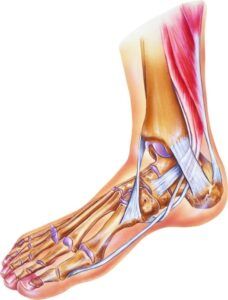

It is not uncommon for a patient to present to the clinic after spraining their ankle. They will often present with a mild to severe limp (or in the worse cases, unable to weight bare on their foot). The impact of this can be more than just pain and swelling of the involved ankle. The change in gait that occurs can result in knee, hip, and low back pain due to the shift in load in the involved limb.
The foot comprises of 27 bones plus several sesamoid bones (accessory bones) as well as a significant number of ligaments tendons and muscles that can be injured when subjected to forces causing a sprain or strain.
The first line of treatment after injuring an ankle is always RICE – rest, ice, compression, and elevation. As soon as possible after the injury, it is important to get the ankle assessed. We will examine the ankle for swelling and/or bruising and then assess its range of motion. If we believe there is a possibility of fracture, we will refer you to your GP for imaging. If this is not the case, we will begin treatment to improve range of motion of the joints to reduce impact on other areas of the body and improve healing. We can also administer dry needling in some instances, which helps reduce swelling and inflammation in the joint.